

Isetta Car?
Driving down memory lane in a little car that became big. Lance Müller looks at the BMW Isetta Export 1:18 from Schuco
The contemporary world marveled when the Smart ForTwo was released in 1998. It seems by that time, most (mostly in Europe I presume) had forgotten the existence of microcars and their popularity. Japan still had a huge ‘Kei’ car culture, albeit it was mostly for domestic consumption with Suzukis, Daihatsu’s and Mazdas ruling the keijidosha roost.
Europe had a love of microcars during the postwar period, with most of the aircraft manufacturers like Messerschmitt, Heinkel and others getting into the little car game, helping people move about in those early days after the devastating destruction of World War II. But most of those cars tended to lean towards the novelty side with consumers. With many being limited two or one passengers, and being, lets be honest, ugly in both look and handling. Nobody is going to call the Peel P50 or the Messerschmitt KR200 beautiful cars.
But out of these plethora of little cars, one model stood out like a giant. And that is the Isetta. First of all, we picture a German car. But it has its origins further south. All the way in Bresso, Italy.
Renzo Rivolta purchased a business located in Isothermos making chillers and heaters in 1939, and at the end of WW2, moved the whole thing to Bresso and converted it to making motorcycles, which was more lucrative during those periods. But as more and more people wanted better weather protection and ability to carry more things, an idea germinated with Renzo to bud a motorcycle engine with an automobile chassis.
Out of this was born the Iso Isetta. Shaped like an egg, four wheels, steering with a single entry point in the front. The car held two passengers in comfort, had a canvas covered roof opening and looked decent for a small car. It wasn’t the hit he expected it to be in Italy. Rather than abandoning the project, he had a bright idea to license out the design to other car makers all over the world. So it became known as the VELAM Isetta in France, Romi Isetta in South America, and the BMW Isetta.
BMW wasn’t the powerhouse we know today. Those days they were struggling, especially as they were building some pretty spotty vehicles. So they got about to making the BMW Isetta a more economical product with the Isetta and quite literally made it in their image. They plugged a decent engine (the one from the BMW R25/3 motorcycle) to it, reworked the whole car to be better and more refined (internally and externally) and gave the world an icon. From 1955 to the end of 1962, they made a total of almost 162,000 Isettas.
The Model
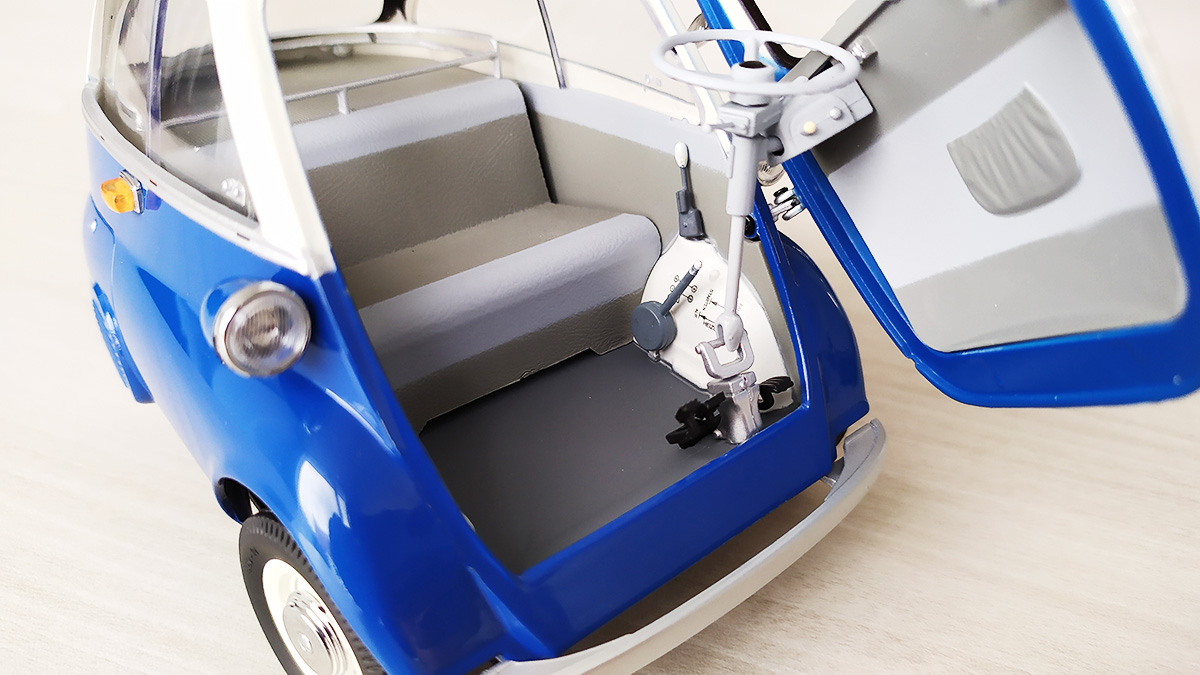
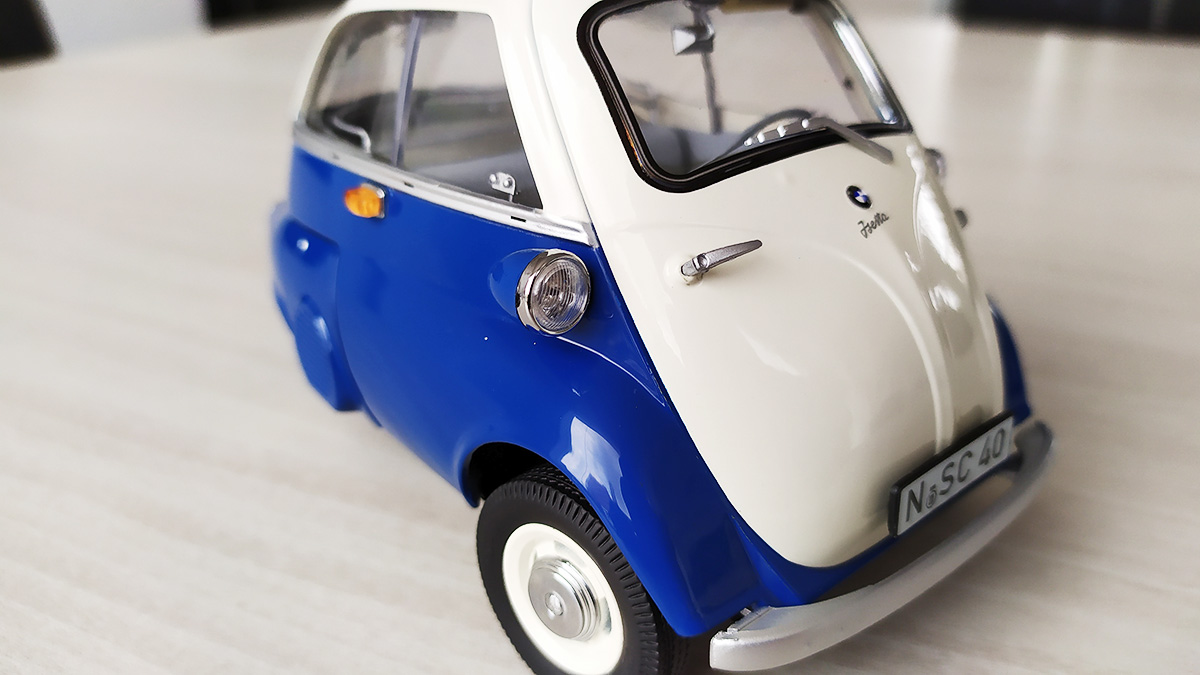
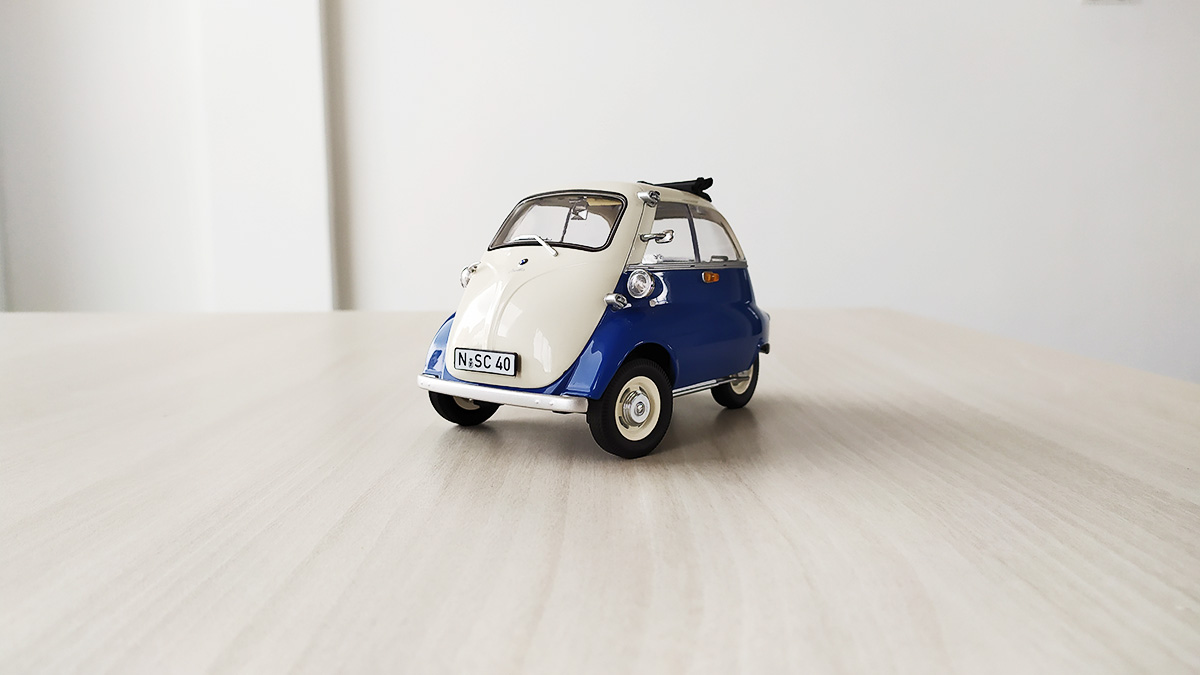
What we have here is a model from the Schuco Edition 1:18 line released in 2019. It details are extremely well crafted. Blue/ivory two tone paint job, with the ivory toned wheels with silver hubcaps. You can open the large front door and see the inner workings of the car. turn the steering and the wheels turn, and even the ‘Cardan Joint” is shown properly. The engine cover is removable and you get to see the power plant that makes this car run.
The only bit that could improve, is the little canvas roof is plastic, if it was made of fabric, that would’ve made this model on par with more expensive cousins. Its costs anything between 82-99 Euros and was limited to 1000 pieces worldwide.
The popularity of the microcars begin to vane in the latter half of the 60s, mainly due to better options being offered by car makers in both Europe and Japan. Models like the Mini, Fiat 500, and others of the ilk, with space for additional passengers, better engines and space for at least the groceries really did put the last bolt on these microcars.

But they live on miniature. Please visit us regularly for more stories, and don’t forget to subscribe. You can share your pictures and stories to our email [email protected]
Please follow us on Facebook and Instagram. Or read the rest of the magazines.

Added by
Casthead Admin
01-02-2024
Recent Blogs









Comments