

Poetry in motion: 1:18 Bugatti Type 57 SC Atlantic by AUTOart
I’ve been a car enthusiast for the better part of 10 years.
My taste in cars has widely diversified throughout that decade. I started off where any young enthusiast does, by initially favoring supercars, then German cars, American cars, and now my love has turned to prewar “art deco” cars.
I think I’ve struck gold with the art deco genre.
I never thought I’d like cars from the 1930s as I used to think they all looked the same. There were a million brands I’ve never heard of that peaked in that decade: Delahaye and Auto Union to name a couple off the top of my head. However, I more than recognized one brand that ruled the 30s — Bugatti and their iconic Type 57 SC Atlantic.

The curvaceous Type 57 is an engineering marvel that even the most novice of car enthusiasts recognize. Just look at those gaudy teardrop fenders, and the effortless almost liquid rear end! It was love at first sight. My eyes have been peeled for a top 1:18 model ever since I first laid eyes on the Type 57. Yeah, sure, Solido has multiple Type 57 offerings, but I wanted a proper, high quality model and one that does justice to the graciousness of the Type 57.
My search for a premium-level Type 57 took six+ months before I finally found the holy grail of scale model Type 57s. AUTOart’s rendition being my choice, the only downside was that it’s almost as expensive as it is good looking costing a cool $350. Is this Type 57 awfully beautiful or beautifully awful? Is it worth dropping all of my savings from the past few months?
First impressions
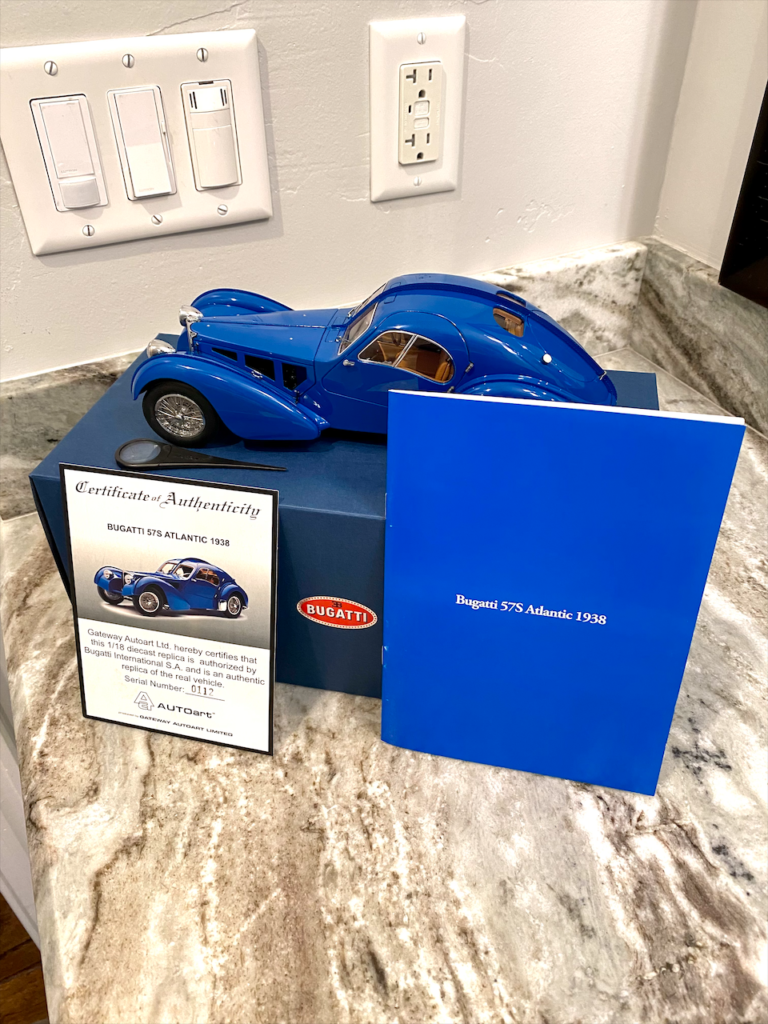
Three hundred and fifty dollars is quite a sum of money, and I was really hoping my hard earned money wouldn’t go down the drain on a model that failed to live up to expectations. I was soon rewarded! This model is fantastic in typical AUTOart Signature fashion. I’ve had quite a bit of experience with AUTOart, but this one really blew me away. The packaging is elegant and minimal, as it is for all Bugatti models. Once opened, I was greeted with a gray styrofoam shell containing the model, a certificate of authenticity, a booklet with information on the 1:1 and 1:18 Type 57, and an AUTOart-branded magnifying glass that doubles as a panel-opening tool.
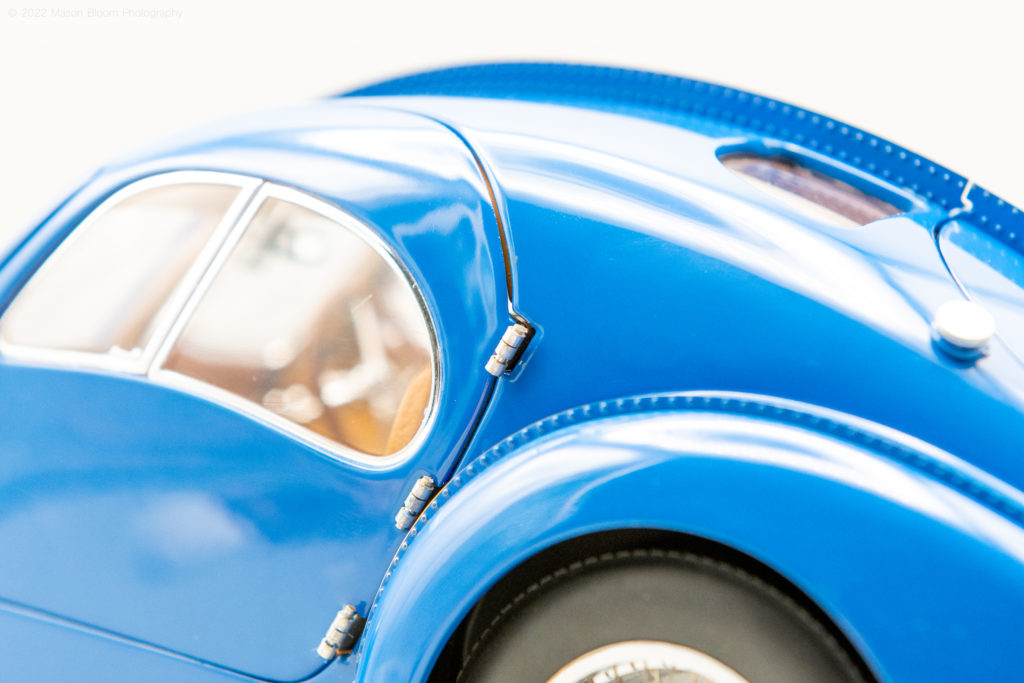
The model is exquisite in every fashion. Small, realistic hinges are found for every opening panel, and the rear cover opens and closes smoothly, exposing an also-removable rear tire. AUTOart does not have removable pieces outside of the rear cover, so you can’t take apart wheels or body panels like you can on similarly-priced CMC models. That was disappointing, but not surprising.
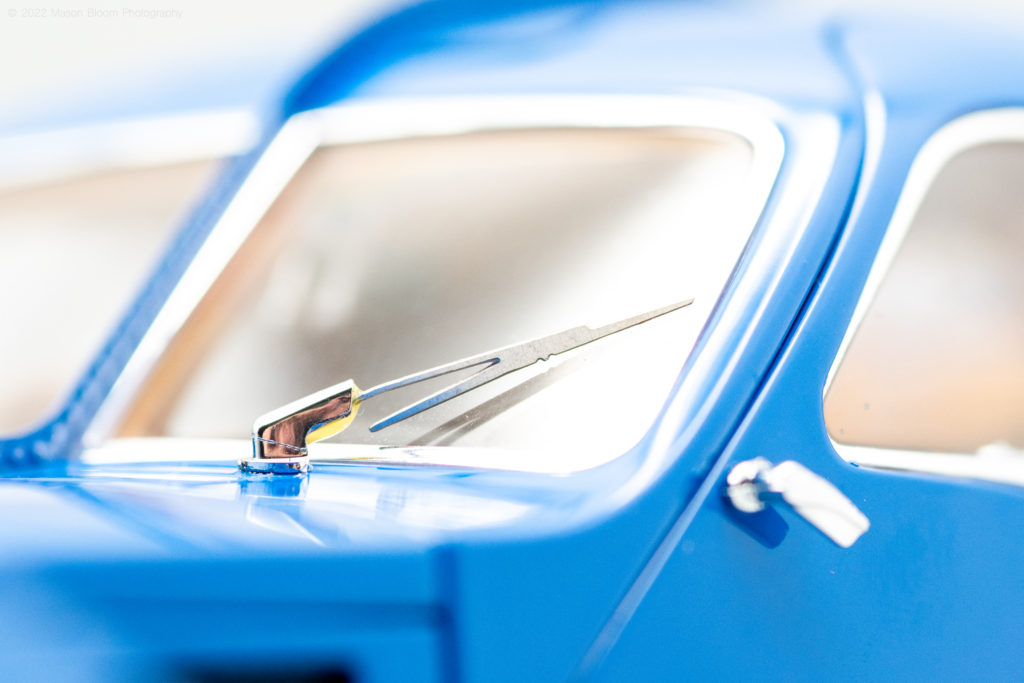
This Type 57 excels elsewhere, with perfect, crisp panel gaps and no loose parts. Metal has been used where plastic would normally be on parts like the windshield wipers and exterior fluid caps among other things. AUTOart made a fine first impression!
Exterior styling
If anyone knows how to recreate 1:18 exteriors, AUTOart does. This has to be among one of AUTOart’s best efforts, every little detail is just perfect. The front grille is fully perforated, with an excellently painted Bugatti badge.
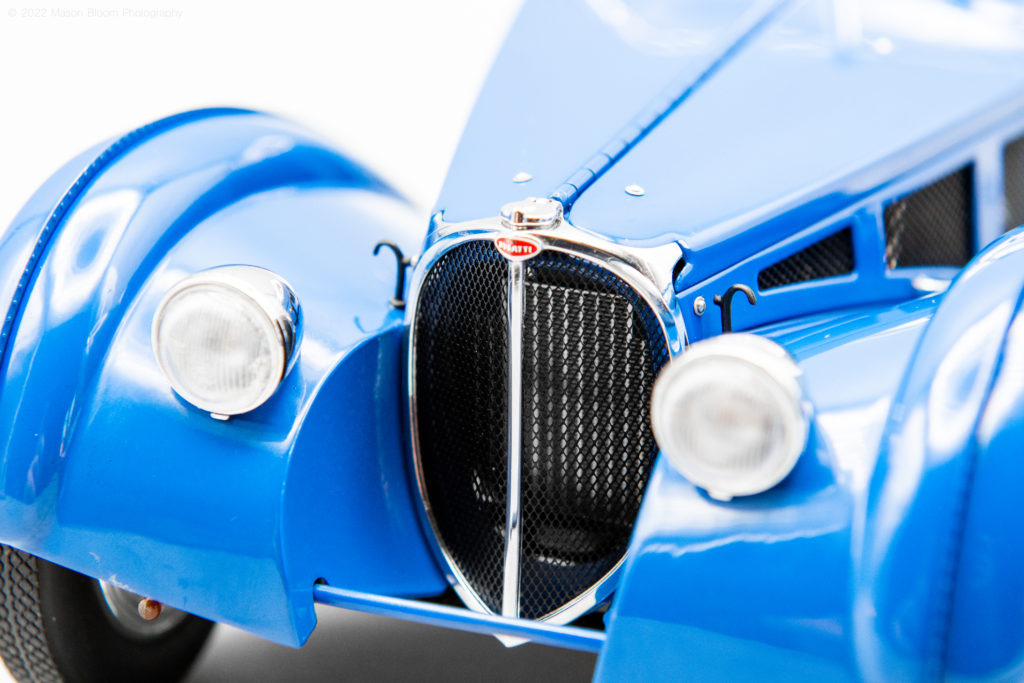
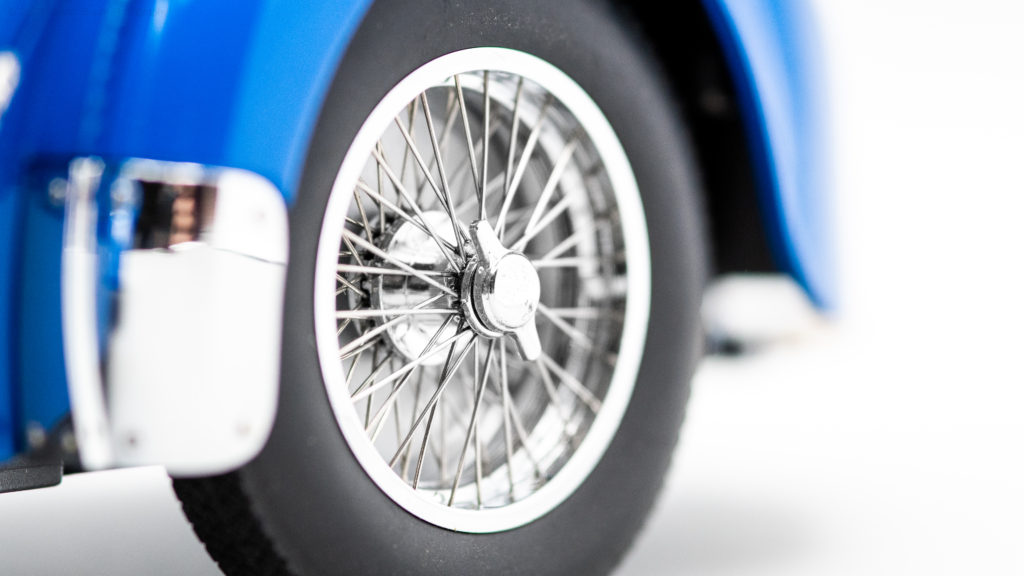
The cap on the nose of the car above the Bugatti badge opens too; exactly what it’s for I don’t know, but it’s a marvelous feature. AUTOart’s depiction of the wire spoke wheels are top notch — the wheels themselves are metal, not plastic like you’d find on, say, Solido’s Type 57.
AUTOart’s fantastic attention to detail extends to the working door handles among other things. When the handles move up, a latch inside the door panels moves with it to secure the door in place, and vice versa. This Type 57 is the only model I own with such a feature.

The rear doesn’t lack detail either. The Type 57’s signature row-of-six exhaust layout is executed impeccably — each pipe has quite a bit of depth and is painted very well. The rear bumper has realistic, metal bolts, and high quality tail lights.

AUTOart has gone above and beyond with the exterior of the Type 57, every little detail is present, every vent is perforated.
There’s nothing to dislike!
Inside the cabin
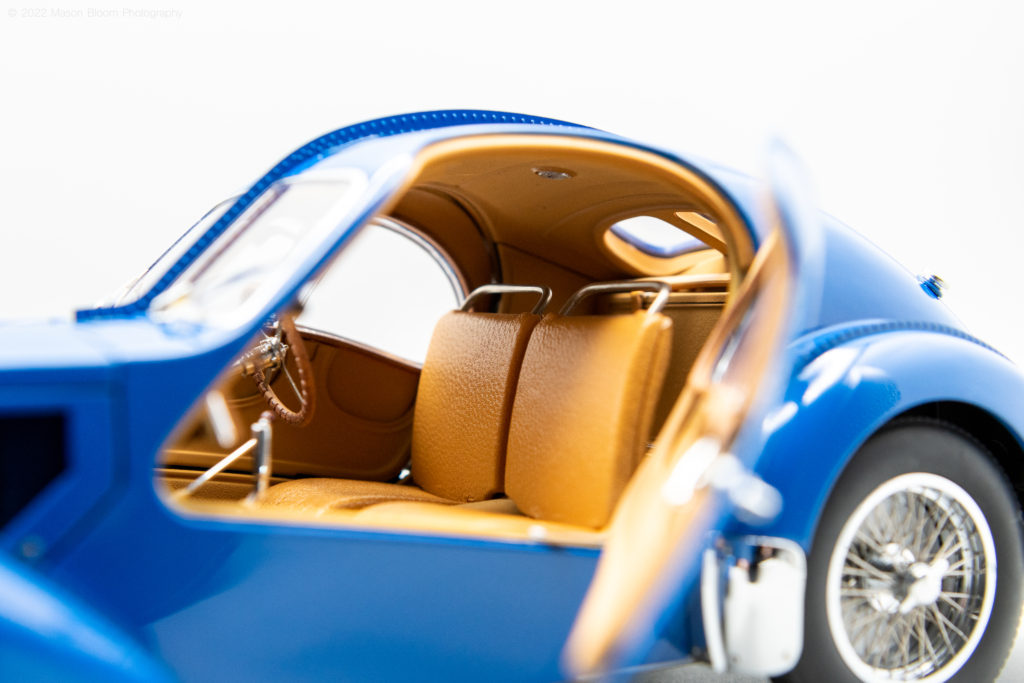
If you thought the exterior was spectacular, feast your eyes on the unbelievable interior! Carpet is in excess, there’s a plethora of ultra-high quality simulated wood, and the prominent shifter and handbrake are exceedingly high quality.
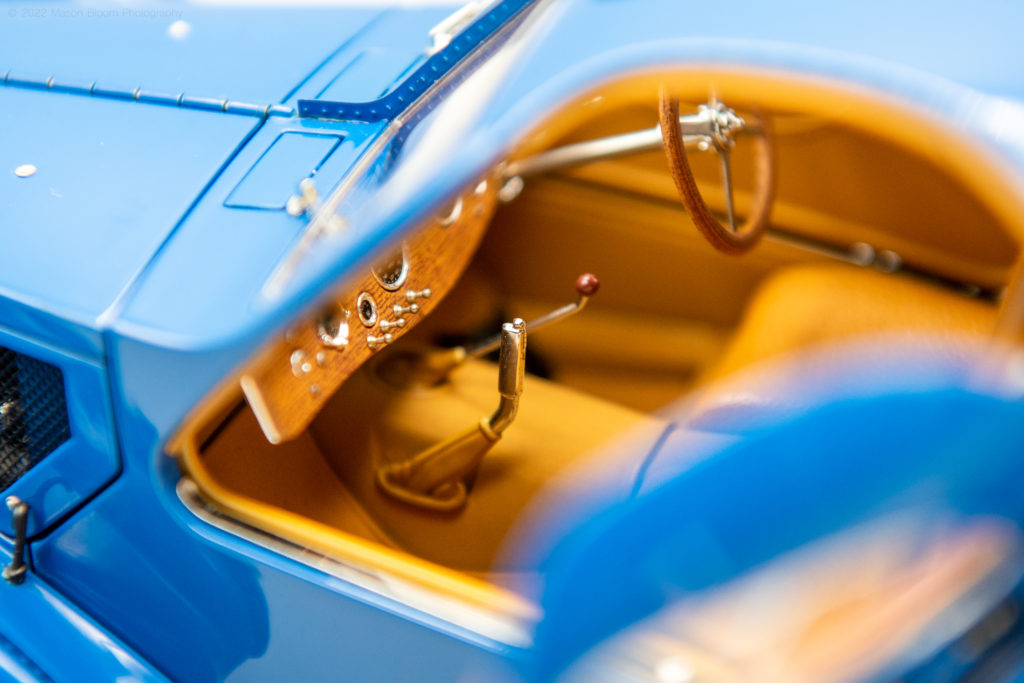
The seats are even “mounted in genuine leather,” making it one of only two models in my collection to feature this material.
The center console and dashboard are the true stars of the show. Each individual gauge is painted and labeled with, surprisingly, legible text, and the simulated wood mentioned above is present throughout. The detail extends to the chrome plated buttons and knobs, which are elegantly positioned across the dashboard.
Thought I’ve discussed all the simulated wood? Well, strap in because there’s still some left to cover! Said wood is found on the almost pirate-ship-like steering wheel, and it also lines the side windows.
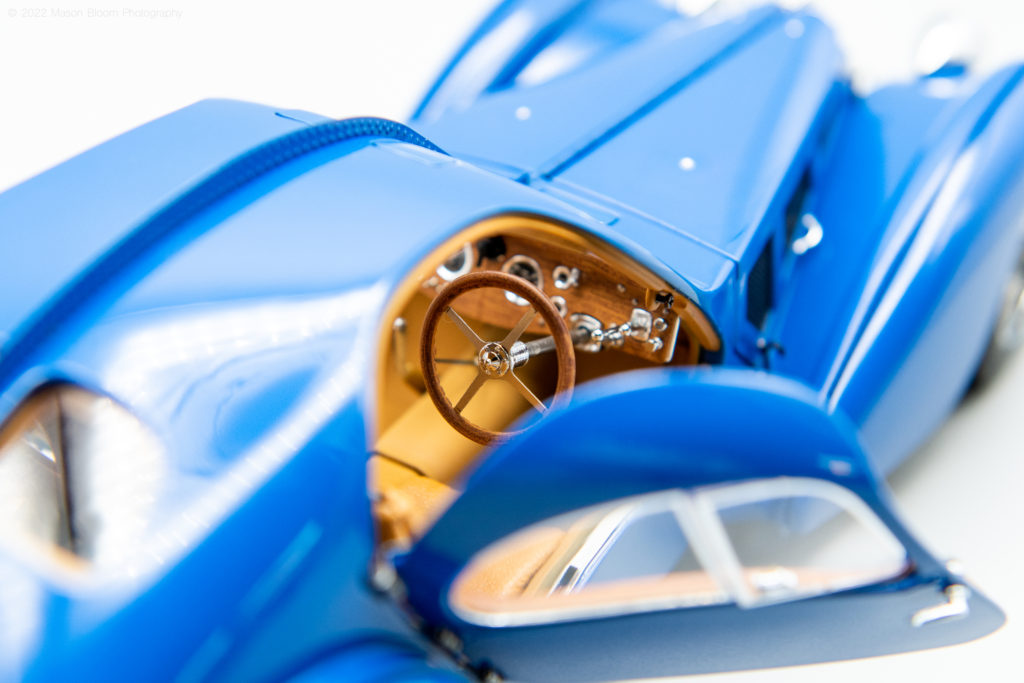
Dare I say AUTOart’s best interior effort to date?
Under the hood
Inline 8! Inline 8! Inline 8!
Who doesn’t love a good inline 8?

If you haven’t caught on by now, the Type 57 uses a spectacular inline 8, producing a whopping 200 horsepower… in the 1930s! For reference, most cars in the mid-to-late 30s were still making high double digit horsepower.

Given that spectacular engine, it’s no surprise that AUTOart went all out under the hood. Individual wires, hoses, and what appears to be a cooling fan are all there in great detail and painted to perfection. Texture on the engine block and surrounding metal can also be seen with the naked eye. After closer inspection, I found not only fluid caps, but also an almost completely hidden, photo-etched radiator. Hats off to AUTOart for putting so much effort into items that are seen far less than exterior components.
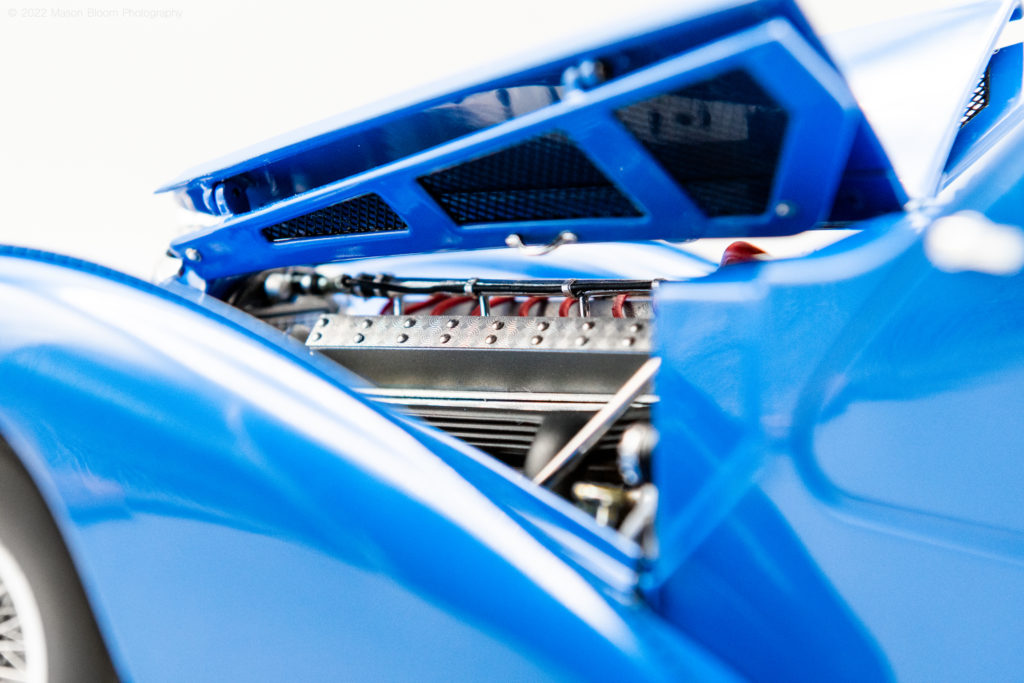
The engine cover itself is just as much of a treat as the power unit that sits underneath. It smoothly folds in and out via realistic hinges, and is fully perforated!
Devil’s in the details
I love the model, but there are a few small things AUTOart could improve upon to make this Type 57 perfect.
Door hinges: The doors themselves are detailed fantastically, but I have two issues with them. The driver side hinge sticks, and requires pressure on the base of the hinge to allow the door to open. The size of the hinges are also off. On this Type 57’s full size counterpart, the hinges are small and thin — barely noticeable. On the 1:18, they are thick and very indiscreet.
Cap above front Bugatti logo: I am quite enthusiastic that AUTOart featured an opening hood cap as it shows the sheer level of detail they put into this model. The only downside is that the chrome plating arrived chipped, revealing a flat, awful silver color.

In the big picture
This Bugatti Type 57 is hands down one of AUTOart’s all time great models. It’s near faultless, has detail on par with the likes of CMC and Almost Real, and truly is everything you’d ever want in a premium 1:18 model. It is one of my top three favorite models I’ve reviewed to date, yes it is that good! AUTOart truly hit this out of the park. I highly recommend it for high end model collectors — you can find it at Diecast Models Wholesale here.



Added by
Casthead Admin
01-02-2024
Recent Blogs












Comments