

Lexus’s Track Monster Born On The ‘Ring
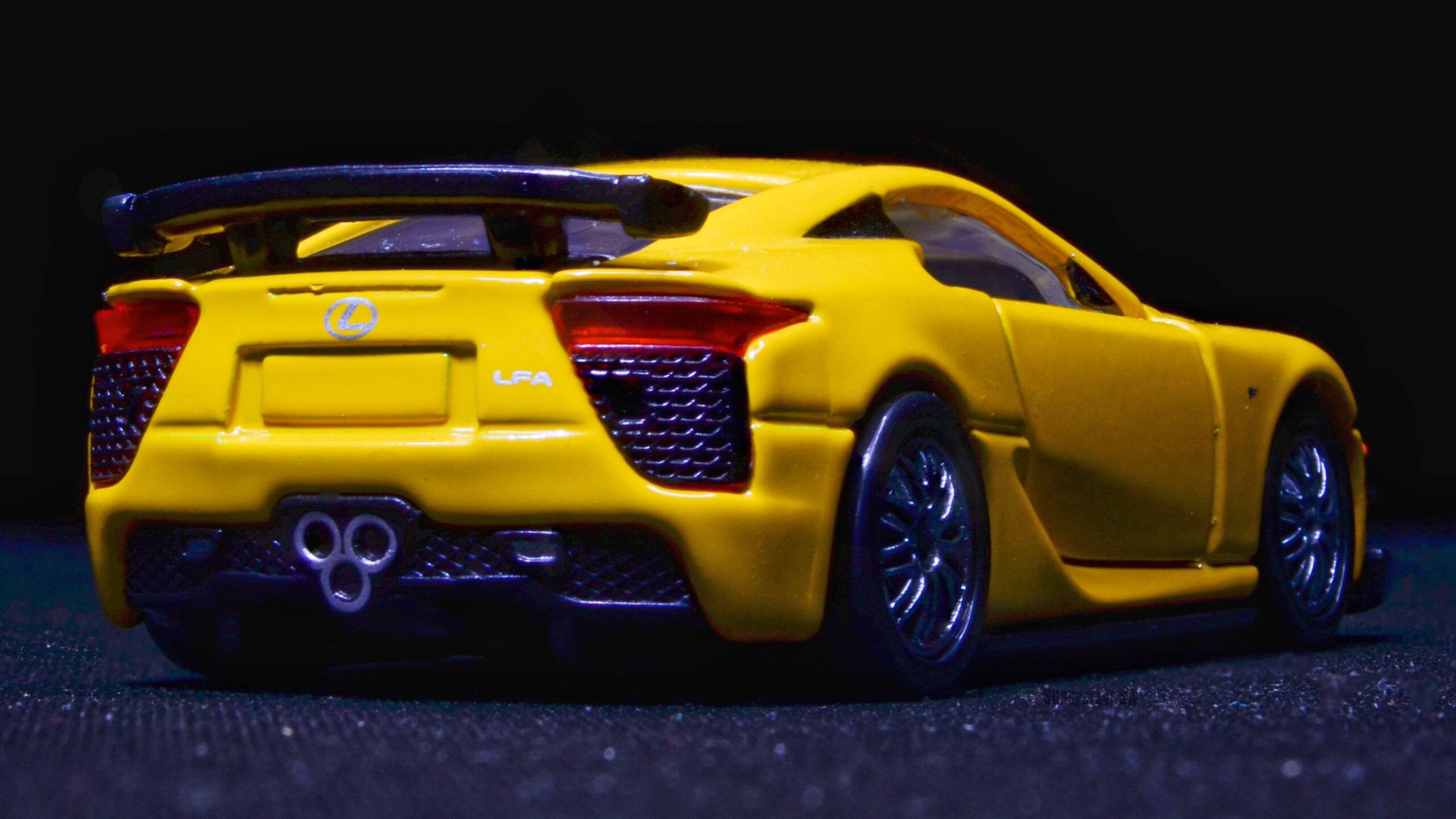
The Lexus LFA has not gotten its due among model car makers. Apart from Autoart’s 1:18 version that SN210 has showed off, there have hardly been any other scale models out there. Well, except this one by Tomica from its Premium line. Tomica’s fans will tell you that the brand has always been eclectic with the right mix of quirky & staid. So the brand wasn’t definitely going to let a home-grown super car go without the right homage, which this certainly is.

Tomica has rendered the Lexus LFA in its Nürburgring special edition form in a 1/62 scale in a “racing yellow” shade with a black plastic spoiler. There was also a special edition “Tomica Mall” release in black. True to the Premium line, this casting has opening doors and small outer details like the aero bits. There are well defined Lexus logos in both front and back with “LFA” printed prominently on the boot. The “F” just behind both wheel arches is a nice touch too and the wheels look true to original too.

I don’t have much more to tell you about the model itself. Except that if you are a supercar aficionado, and can’t afford Autoart prices, this model is definitely a must have. But the birth of the 1:1 LFA is an interesting story and so read on.
The Birth of the 1:1
The genesis of the LFA began on a racetrack in the early 2000s. During a test day at Toyota’s Shibetsu proving grounds, Toyota engineer Haruhiko Tanahashi realized that Shibetsu (with its varied track types and surfaces) was perfect for supercar development. A small problem though – a supercar was not in Toyota’s plans. Undeterred, Tanahashi and his merry band continued to brainstorm that day and even sketched early concepts on paper napkins.

Once back at their desks, their excitement continued. Tanahashi soon found a kindred spirit in Toyota’s chief test driver Hiromu Naruse who chipped in with a few ideas. But they all knew that the volume conscious Toyota board would balk at the idea of a supercar. Enter Naruse protege Akio Toyoda, a descendent of Toyota’s founder Sakichi Toyoda and a director of Chinese operations. Akio Toyoda preached patience and in the interim, he helped fine tune some of their ideas. A skilled driver and motorsports enthusiast, Akio himself drove the best supercars of that era to benchmark their concept.

But even with Akio Toyoda on their side, Tanahashi and Naruse had a mountain to climb before their concept could see the light of the day. Opportunity came knocking soon, when Toyota decided to introduce Lexus, until then an overseas only brand, into the Japanese market. With Toyota brand manager Atsushi Takada on his side, Akio convinced the Toyota board that a halo car would be a great differentiator in the Japanese market. And the LFA was born, with the board approving a 500 unit limited production run.
The LFA Goes Racing!
By late 2003, Akio Toyoda himself was thrashing early LFA prototypes around Shibetsu. But to showcase the LFA’s real world capabilities, both Toyoda and Naruse had their eyes on the same patch of tarmac – Nürburgring’s Nordschleife circuit aka Green Hell. In 2007,Toyoda and Naruse got their marching orders with the formation of a new works team – Toyota Gazoo Racing reporting to them. They set their sights at the ADAC 24 Hours of Nürburgring in 2009 where they entered a pair of LFA prototypes.
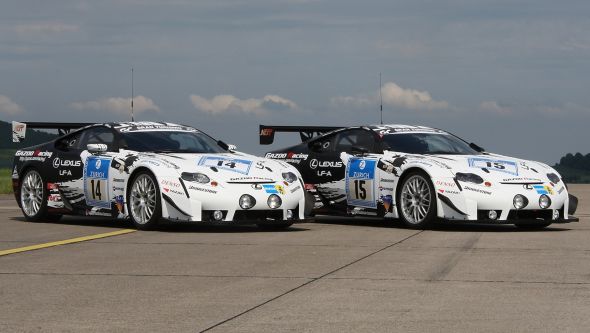
Gazoo Racing’s Lexus LFA Prototypes (source: Toyota Gazoo Racing)
Akio Toyoda’s personal participation as a test driver in the LFA’s development gave him a significant voice at Gazoo Racing. Plus he’d become President of Toyota by then and this ensured his induction into Gazoo’s driver roster for the Nürburgring 24, albeit under the pseudonym of Morizo (a quirky Japanese cartoon figure).
While Gazoo Racing scored a twin DNF in 2009, the track experience proved invaluable for Haruhiko Tanahashi and the LFA development program. In 2011, a fully road legal LFA with the Nürburgring package held the record for the fastest series production car around Nordschleife. And with incremental improvements, the LFA scored class wins in the 2012 & 2014 editions of the Nürburgring 24.
Epilogue
While the LFA was conceived as an “embodiment of how an ultimate Lexus should connect with its owner”, arguably it never got its due as a supercar. Perhaps the LFA never managed to overcome the disconnect between Toyota’s plain image and its Ferrari-esque price tag. Production began in 2010 (incl. a special Nürburgring optional package) and ended in 2012 without a successor being announced. On the flip-side, the LFA has left a lasting legacy on the race track. The lessons from their early LFA prototype campaigns has given Gazoo Racing an edge in the FIA’s World Endurance Championship. The team has tasted stupendous success at Le Mans with 5 straight overall wins between 2018-22.
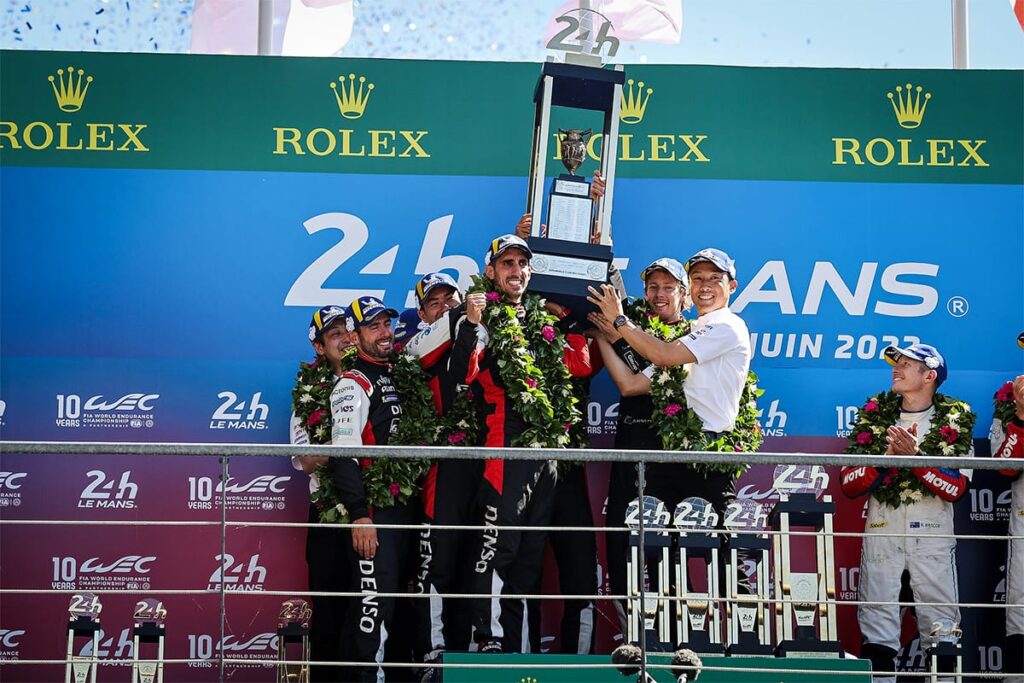
Gazoo Racing Le Mans 2022 Podium (Source: Toyota Gazoo Racing)

Added by
Casthead Admin
02-02-2024
Recent Blogs









Comments