

The Last Bugatti at LeMans
Bugatti’s early days of racing
Bugatti had a strong history of racing during its prime in the 1930s. The Bugatti Type 35 is likely the most well known Bugatti in history and possibly the most successful racecar ever. Its horseshoe grill and 8 spoke wheels are unmistakable. The Type 54 replaced it and in the late 30’s Bugatti went for the biggest race in the world. LeMans.
At this point additional bodywork was the norm for cars at LeMans to aid in aero for the long straights at the race. Bugatti debuted the Type 57 Tank Car. Despite sharing many things with one of the most beautiful cars ever made – the Type 57 Atlantic – the tank car was not much of a looker. Bugatti was still focused on exquisite engineering and built that car to dominate the race. It set a new lap record and two years later set it again. The lap record would not be beaten for another decade (WWII put a stop to the race for many years, but still).
Bugatti would have a rough go ever since WWII especially with the death of Ettore Bugatti in 1947 and did not see any sort of resurgence until the late 80’s and early 90’s.
From the Ashes
In 1987 an Italian Entrepreneur by the name of Romano Artioli acquired the rights of Bugatti and was determined to bring it back to its full glory. His plan was ambitious, but true to the ideal of what Bugatti was.
A fantastic museum of a manufacturing facility was built in Capogalliano, Italy and Artioli went to work acquiring the best in the business for the new Bugatti supercar. The designers of the Miura and Countach were used to create the design. The best engineers went to work creating the carbon fiber tub from an aerospace company, a bespoke quad-turbo 5-valve-per-cylinder v12 engine was made, and the power was sent to an all-wheel-drive system. It was a hypercar before hypercars. Remember the McLaren F1 came out after, made less power, and was light on new tech. Artioli was making sure the latest Bugatti was going to be acceptable to its namesake. It debuted 110 years to the day on Ettore Bugatti’s birthday and was thus named the EB 110.
For more info about the streetcar, check out Scott’s post here!
Back to LeMans
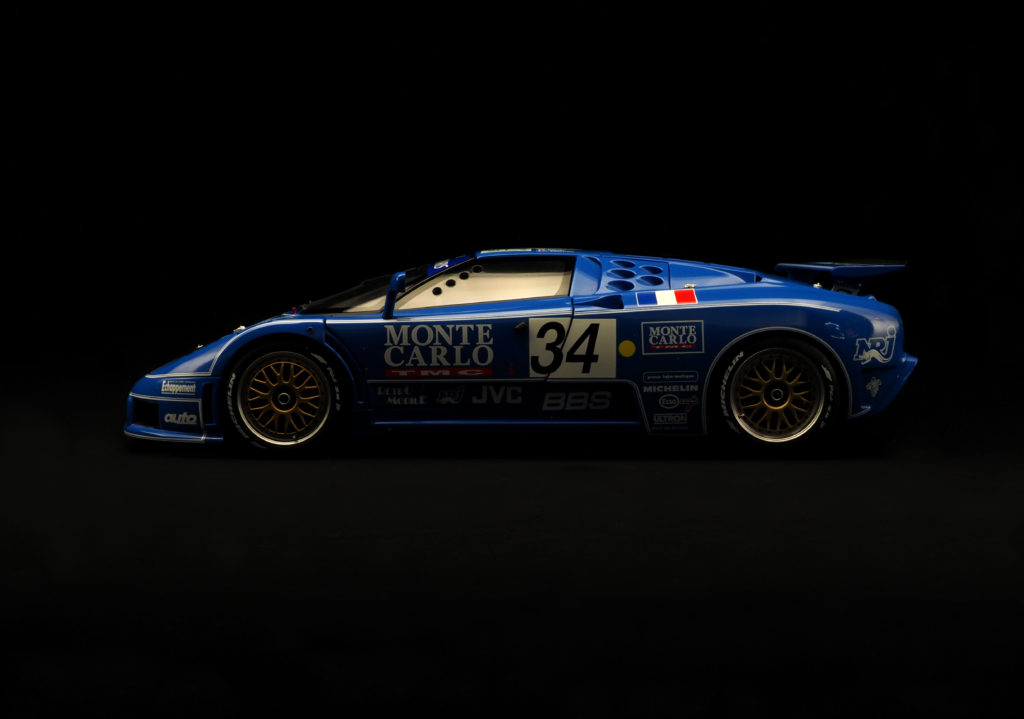
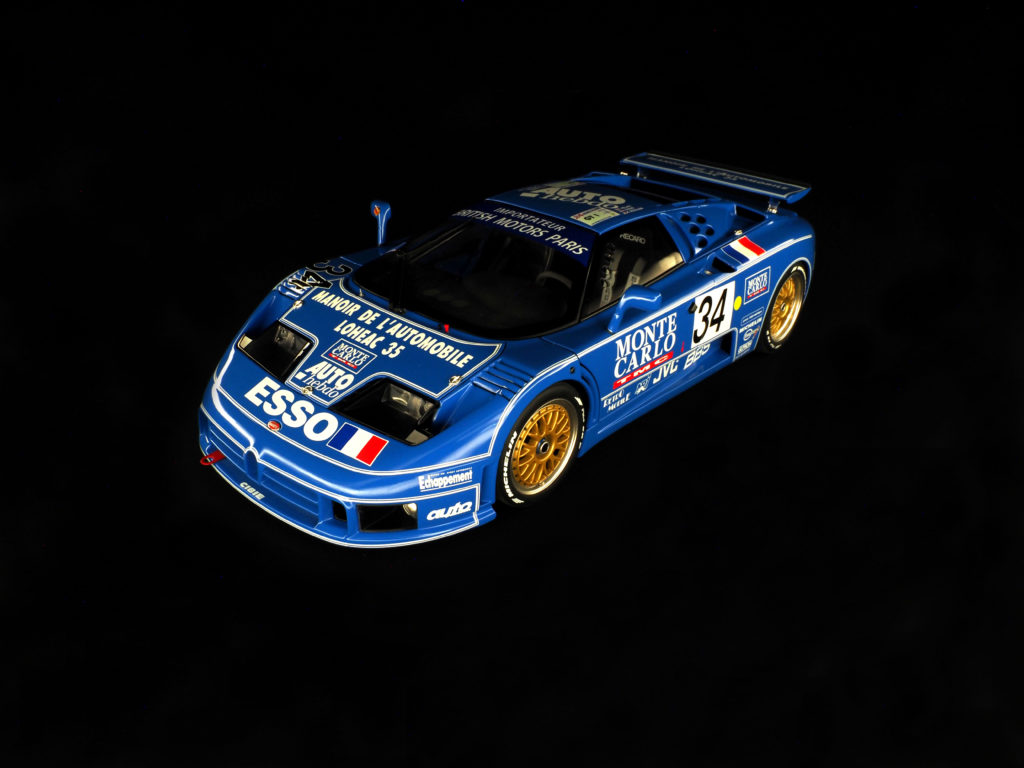
Artioli knew it was important for Bugatti to get back into racing. It was a pillar of what Bugatti was. 2 cars were made; one to go to LeMans and one to go race in IMSA in the United States. Taking a complicated supercar and making it ready for endurance racing was quite the feat. The front and rear ends were tweaked for better aero and cooling. The gearbox had to be redesigned, inspiration coming from F1 at the time. BBS single lug wheels were swapped, creature comforts removed, roll cages fitted, and Bugatti was ready to return to racing.

The Race
Bugatti started well for having no time to test the car and being up against a gauntlet of heavy hitters. This was the first year for GT1, sitting behind the classes WSC and P2, with GT2 bringing up the rear. It started in 17th on the grid and 5th in class. The EB110 fought well and even managed to hit a high of 6th place during the race. 5 turbochargers would end up being replaced – a consequence of limited testing and using a roadcar drivetrain for an endurance race.
Doing well to fight through the grueling race, the car was closing in on the end of the race with mere hours of the 24 to go. It suffered a tire puncture, spun out of control, and was unable to finish due to damage from the crash. The second car in silver would go to Daytona in 1996 but suffer a gearbox failure.
By this time, Bugatti had suffered severe financial strain and went bankrupt. Artioli had pushed all of his own funds into the company to keep the EB110 going, but with sluggish sales, an incredibly expensive car, and a global economy taking a dive; Bugatti would once again come to an end.
The Model
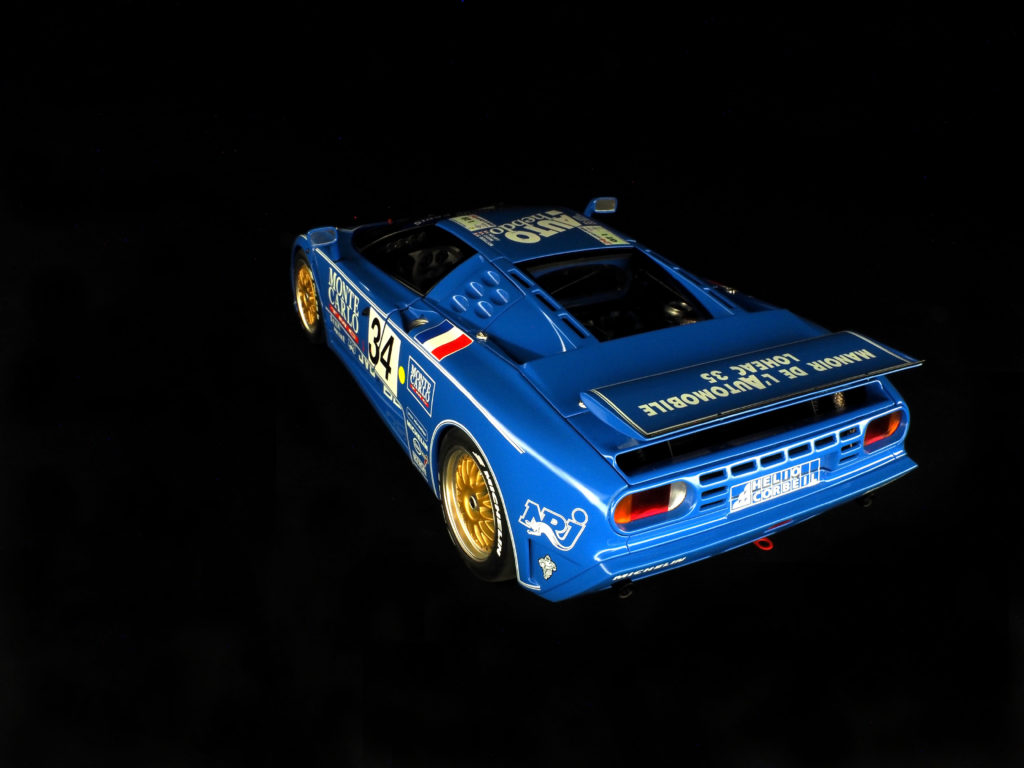
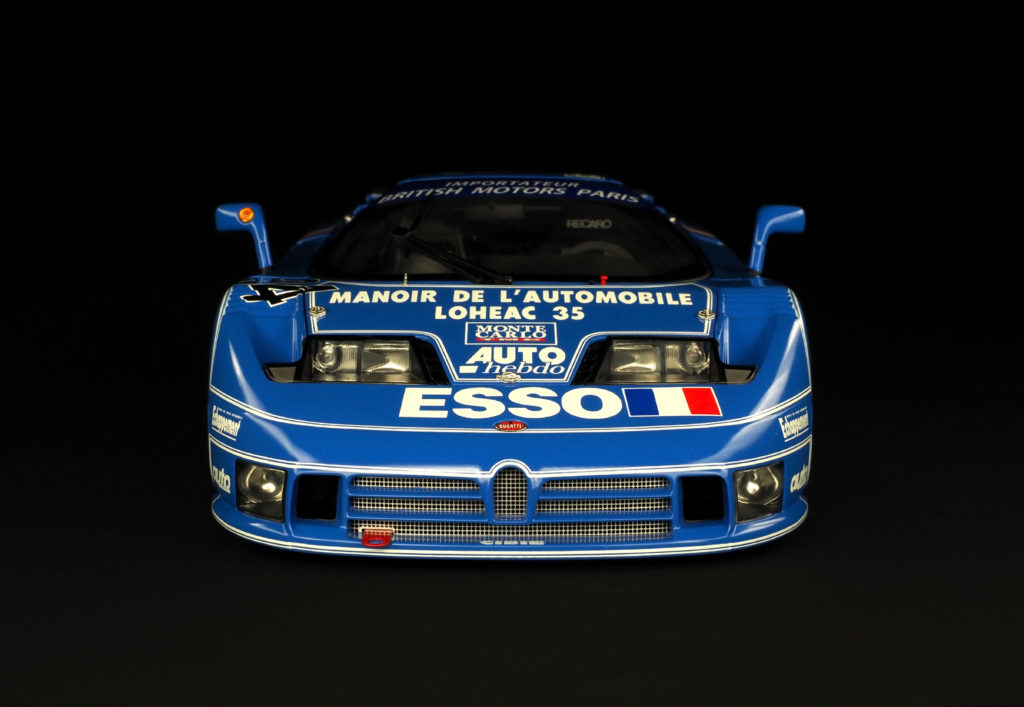
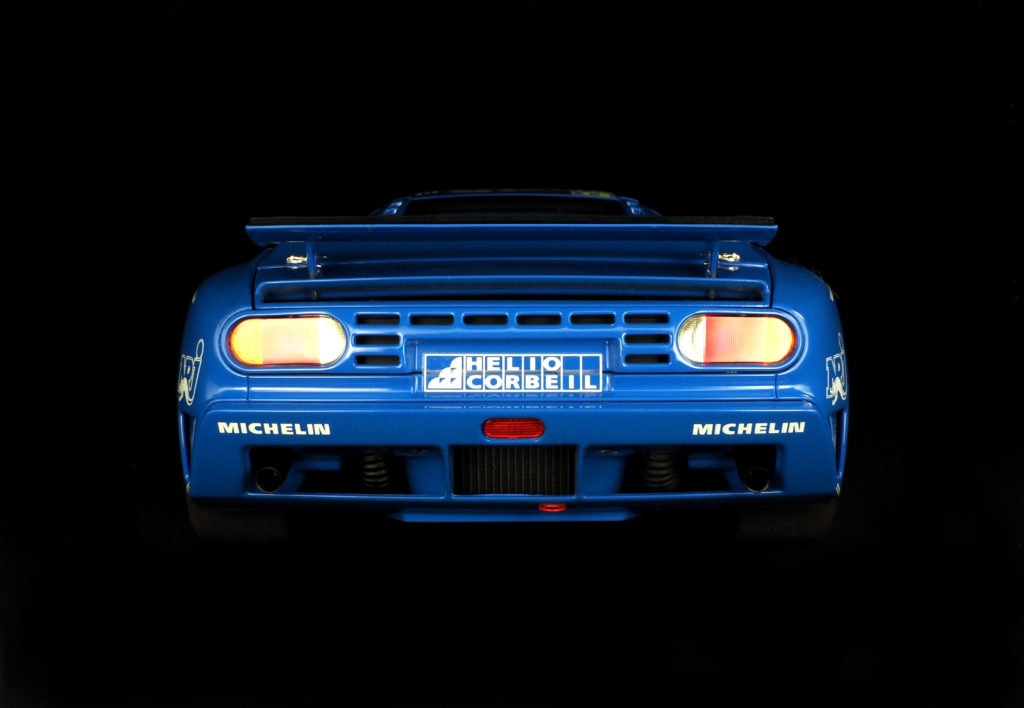
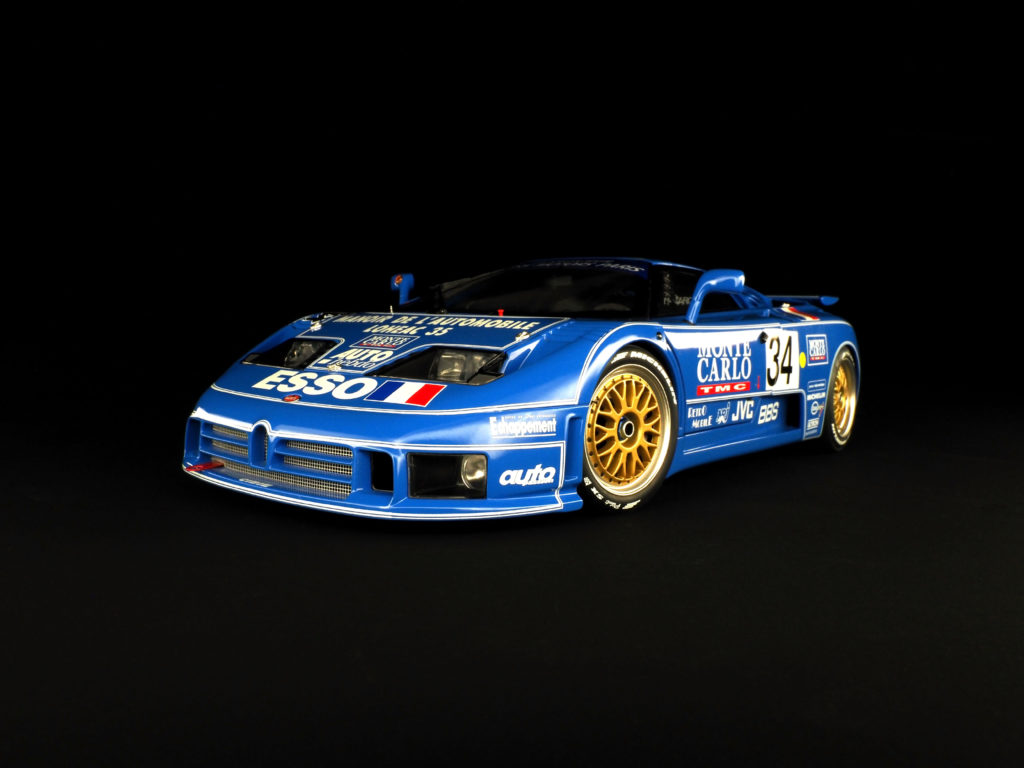
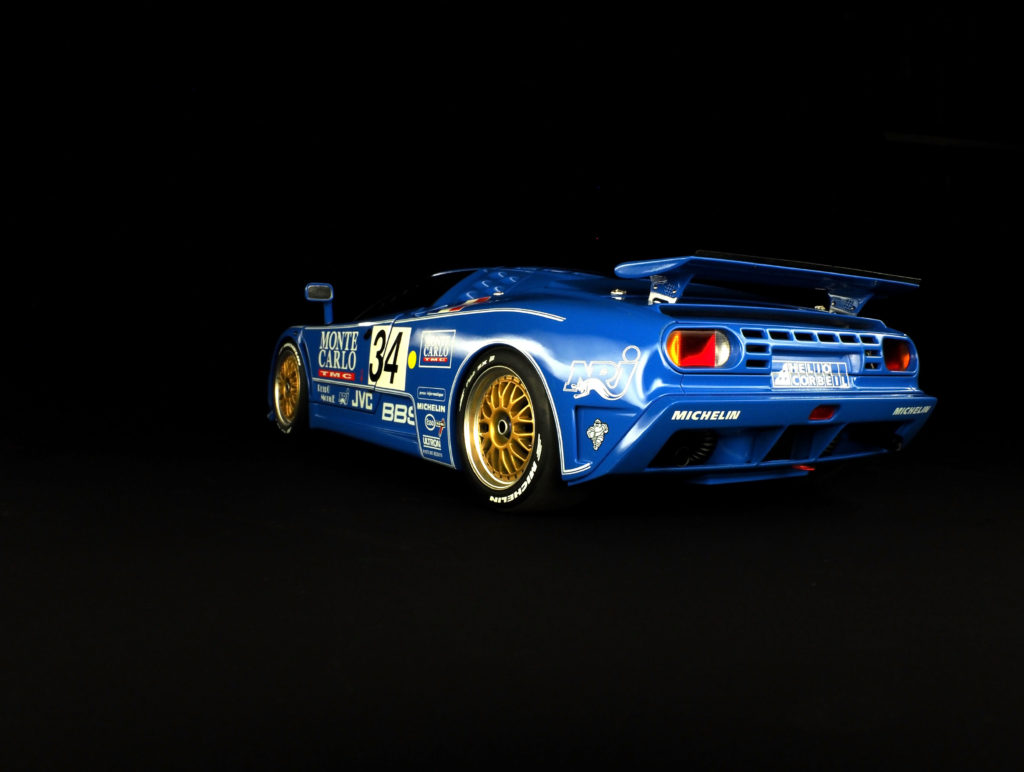
Despite a sad ending to a potentially incredible vehicle, the EB110 LeMans is now available to us via one of the best model makers in the business. AUTOart released the 1/18 model this year in their composite material and I think they have finally figured things out with their new methods. Old AUTOart seems to be back with their quality and attention to detail. I was quite pleased when I received the model and started the unboxing. Like older Bugatti AUTOarts, the box is on another level.
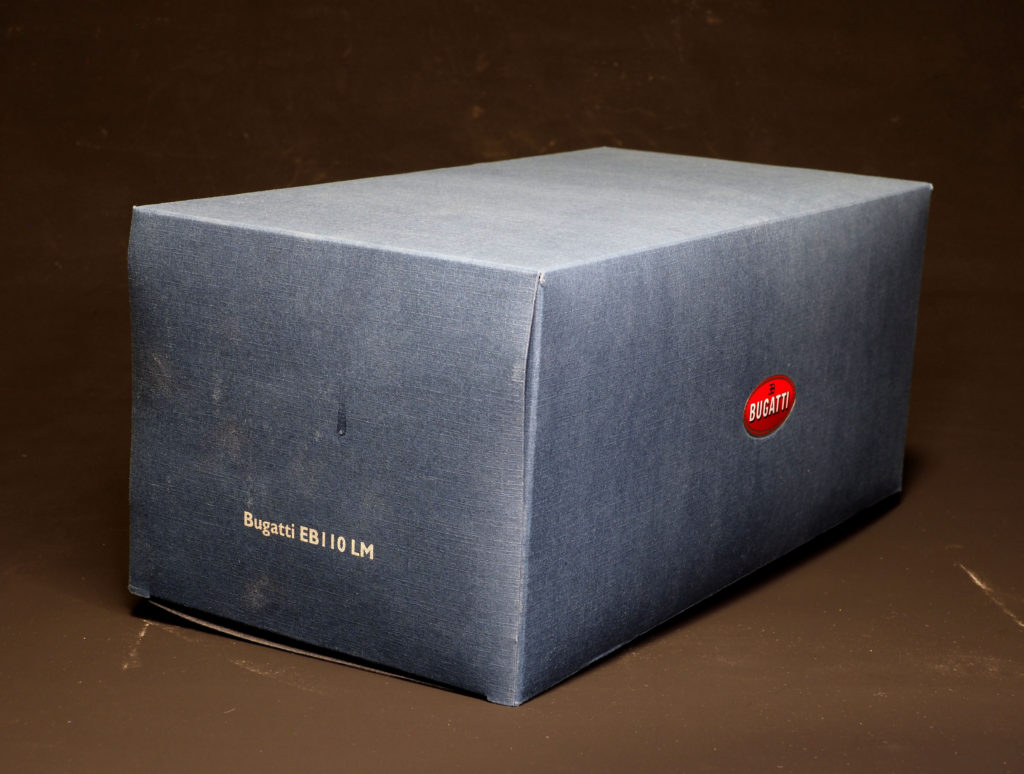
Bugatti seal on the high quality card stock with a nice texture.
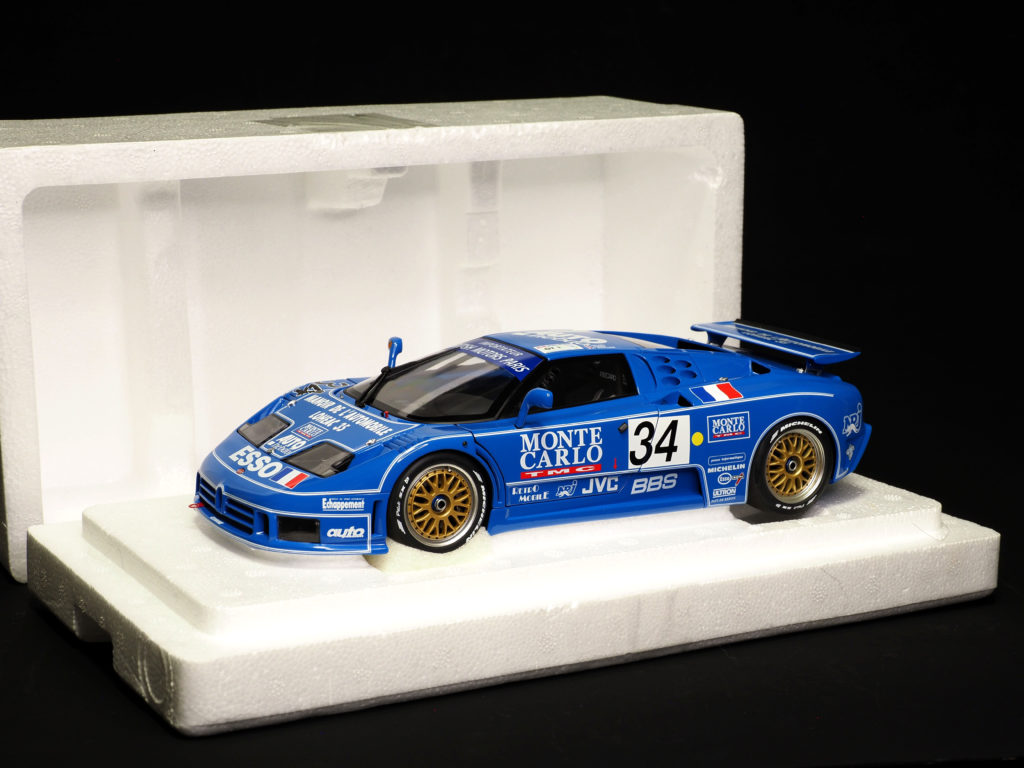
Incredibly detailed model lurking in the styrofoam.
I am no stranger to AUTOart. They are my go-to for 1/18 and have produced many of my favorite racecars like the Porsche 917lh and Mazda 787b. This is my second composite of theirs and I think they have stepped their game up to match their new price. Edges are crisp, shut lines are minimal, and the model doesn’t seem like it will break if you look at it wrong. The details are fantastic, let’s take a closer look.
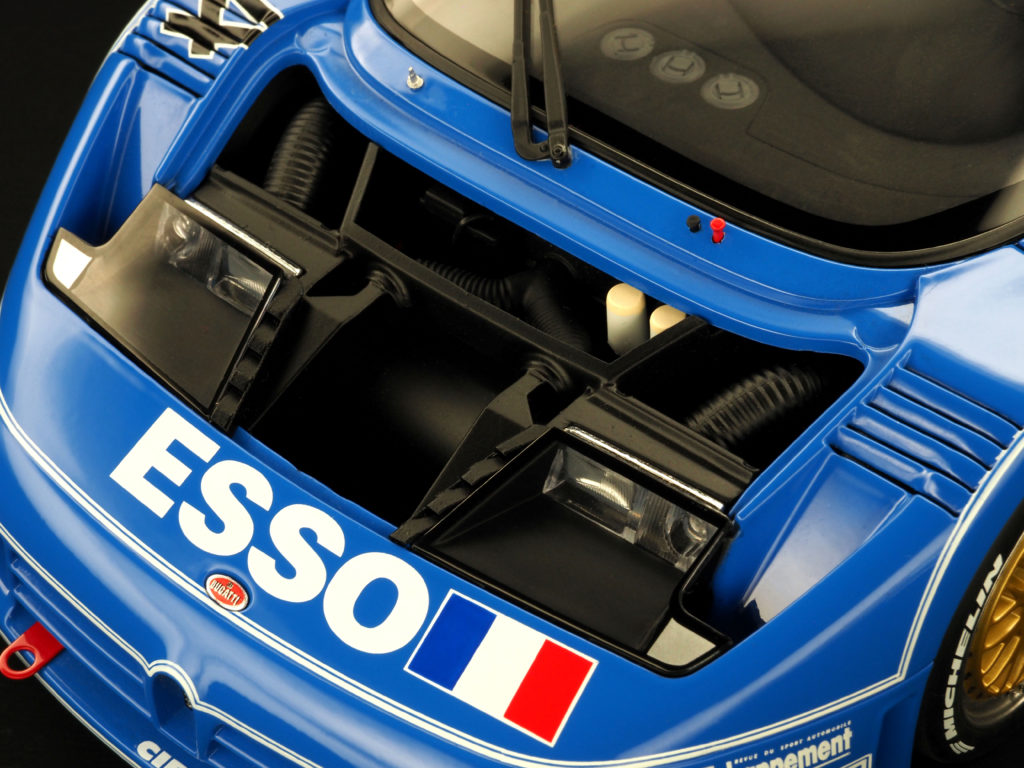
Front hood opening is simple, but detailed.
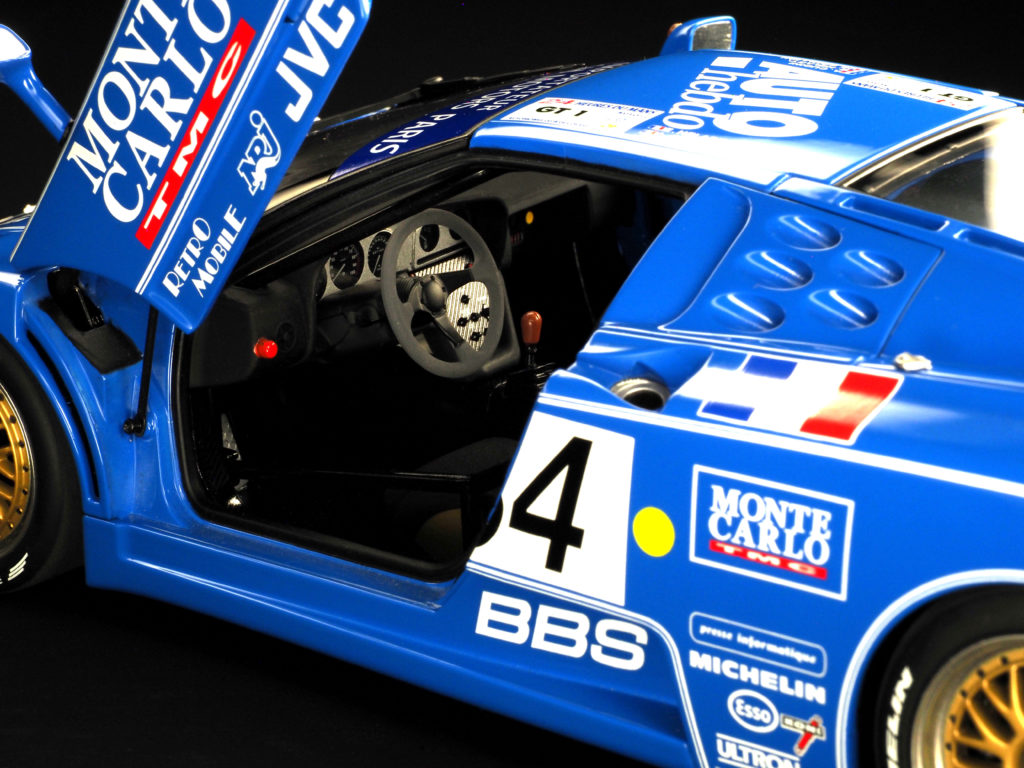
First door on a scale model of this quality that springs itself open. It latches into place and you use the AUTOart door opener to pop it open! It’s amazing! Oh yeah, the interior is good too 😉
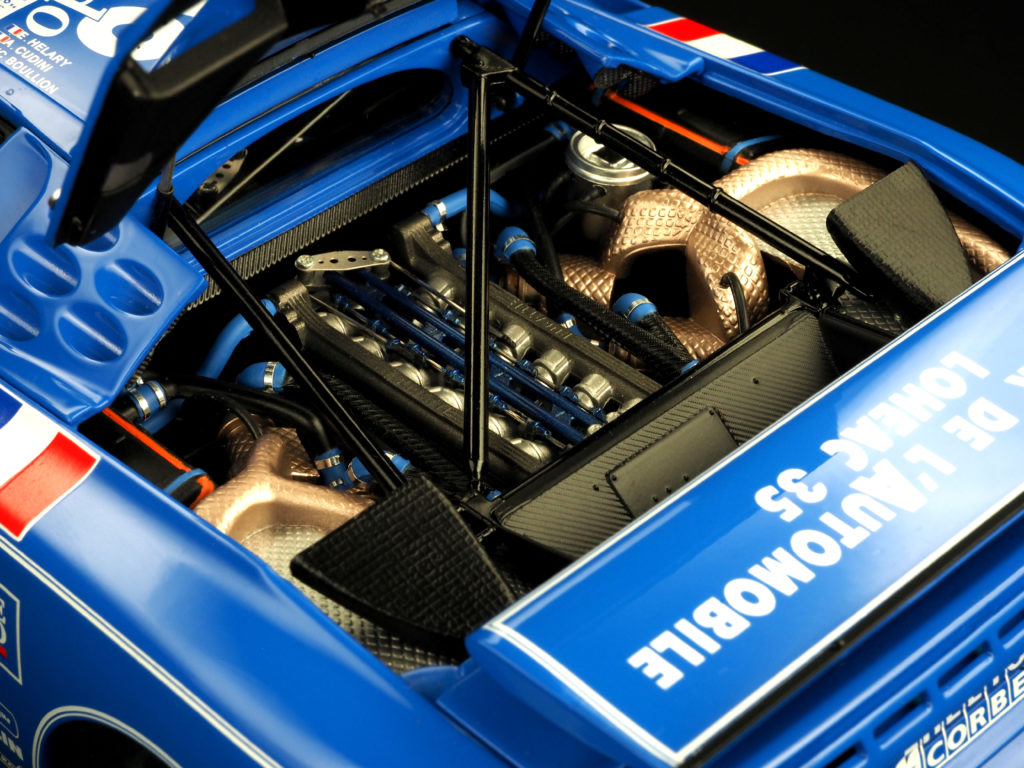
The piece de resistance. The engine bay is incredible. Throttle linkages. Cooling hose clamps! Bracing and heat shielding! Perfect representation.
Setting the bar
Once again, AUTOart proves why it is setting the bar for 1/18 model quality. It comes at a price, but when the likes of BBR and others are charging you more, you start to wonder why. If you like quirky supercars-turned-race cars, this is the car for you. It may not have won anything, but there’s no doubt the EB110 is going down in history as a legend. It was simply ahead of its time, paving the way for the Veyron and Chiron we know and love today.
Enjoy some more images
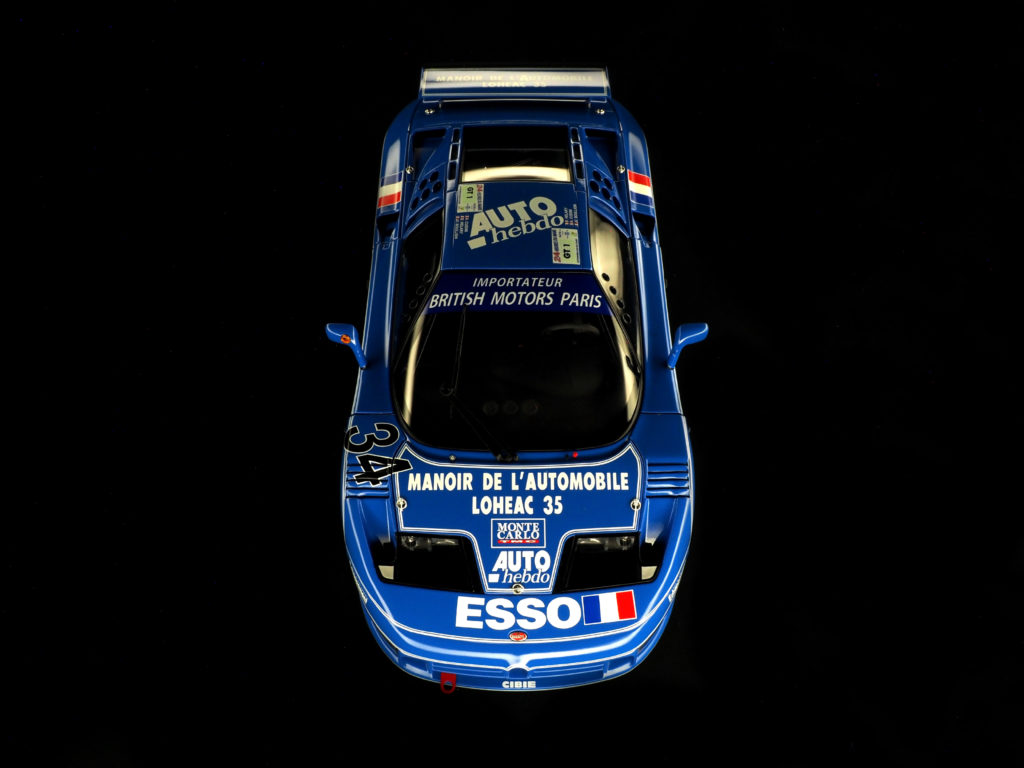
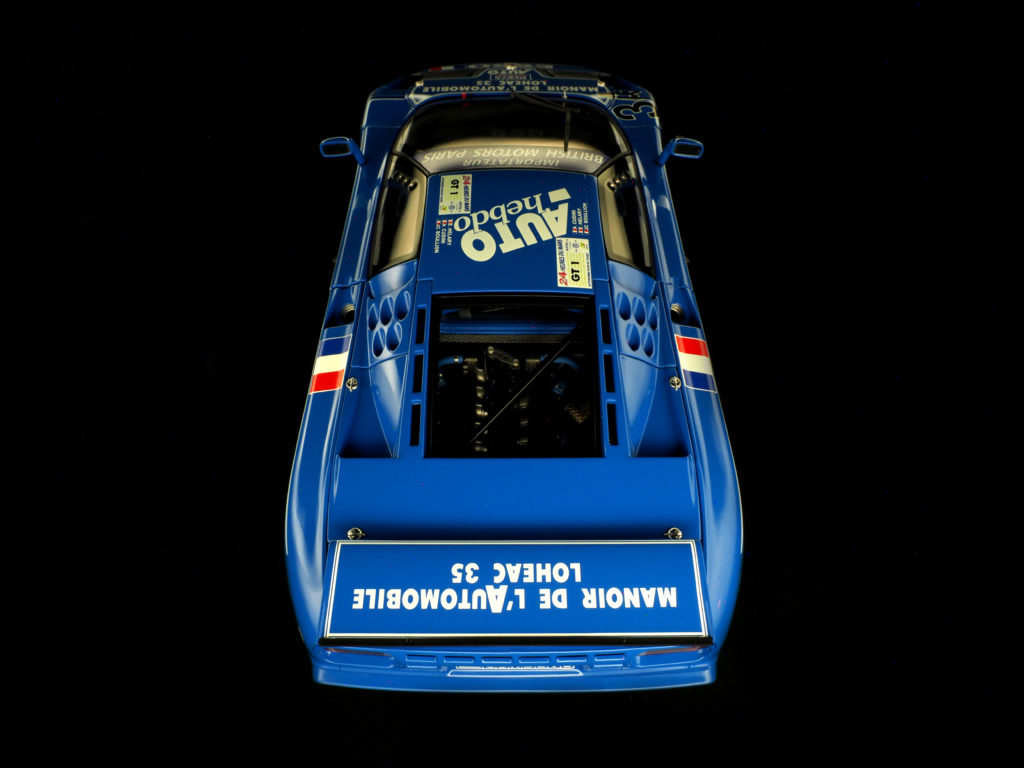
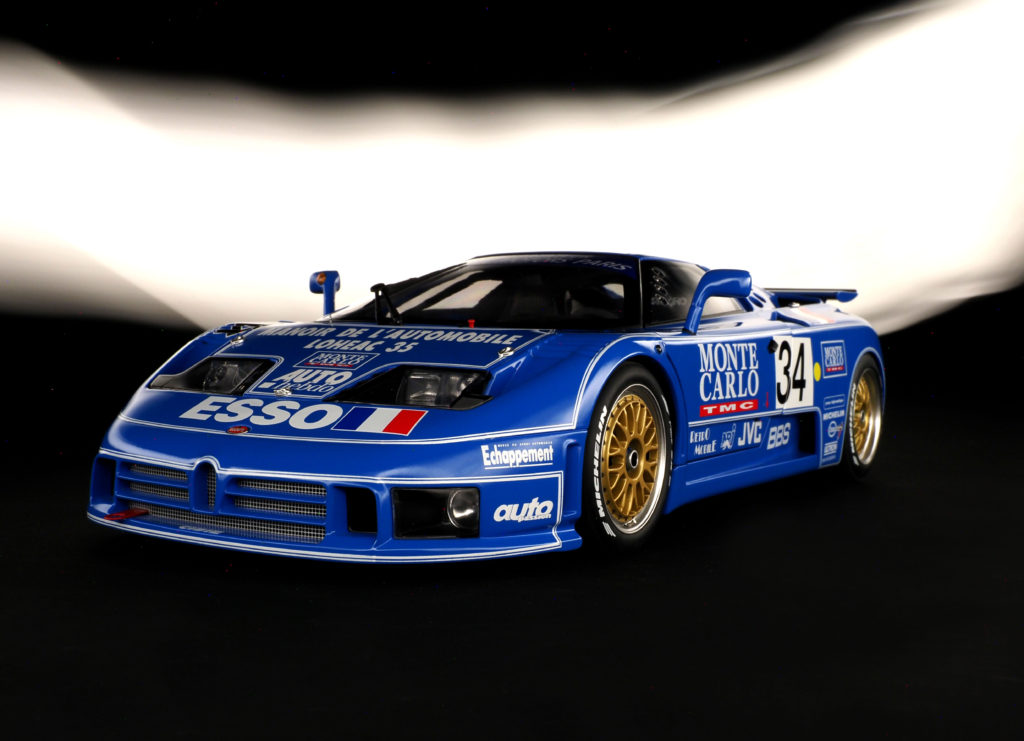
Cheers!

Added by
Casthead Admin
02-02-2024
Recent Blogs









Comments