

She Was The Fastest 935 Ever, And Still Is.
So said John Fitzpatrick about his Porsche 935 K4. And he was not wrong.
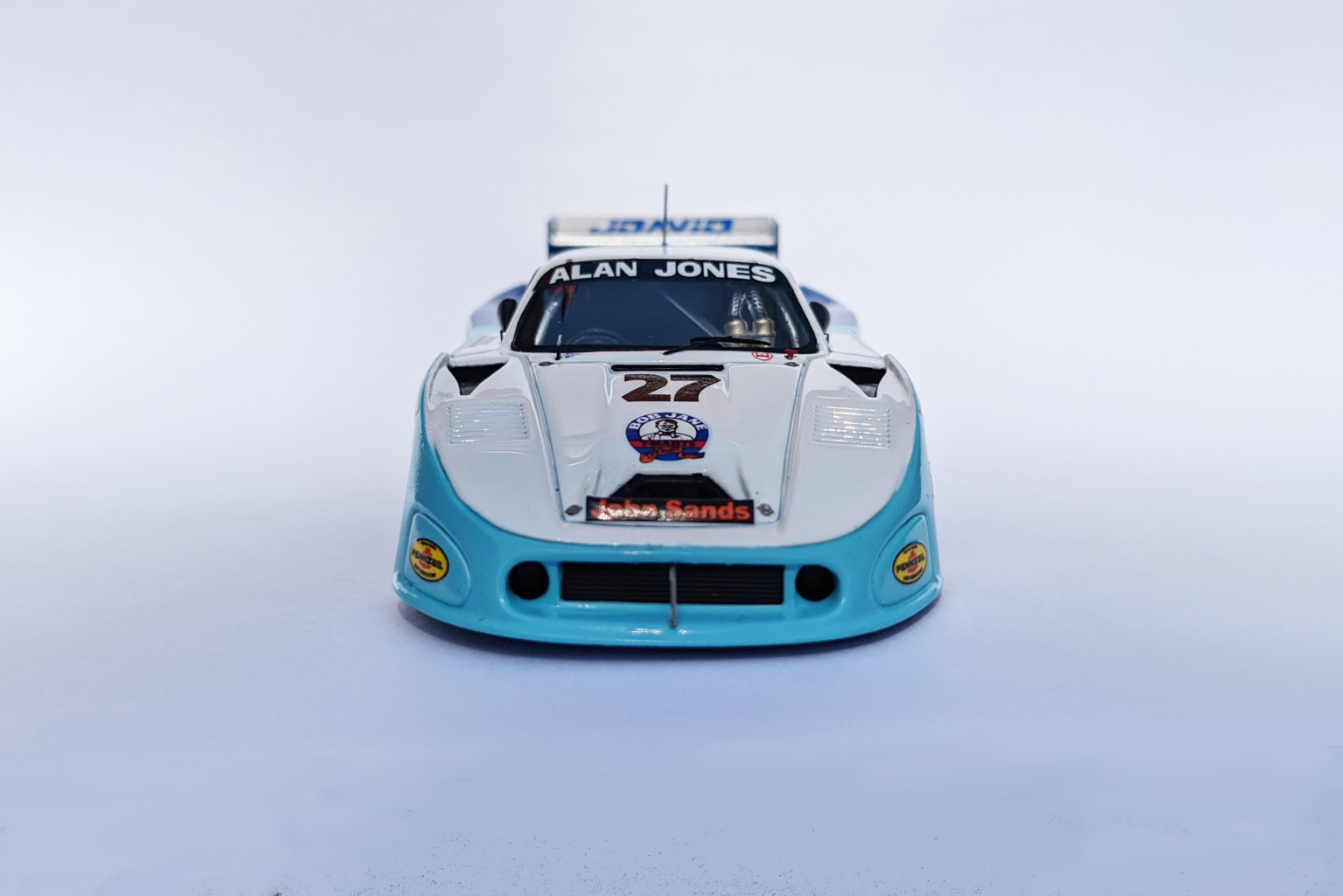
This is a Kremer Porsche 935 K4. Driven by Alan Jones, sponsored by jdavid, maintained by John Fitzpatrick Racing. It was brought from the United States to Australia in 1983 to compete in the 1983 AGP Sport Sedan Challenge, a 15-lap support race for the Australian Grand Prix held at Calder Park in Victoria, Australia.
This race featured an eclectic bunch of cars to say the least. Besides this epicly liveried 935 K4, there was Momo founder Gianpiero Moretti’s red 935 driven by the man himself, an Alfa Romeo Alfetta with a 6 liter Chevy engine, a John Player Special BMW 318i with the ultimate in boxy fender technology, a Mercedes SL, a Chevy Monza driven by Peter Brock, and a Queensland-built Kaditcha KS83.
As you can see from the video footage of the race, Alan Jones started running away with it from a pretty early stage, but it’s an entertaining race nonetheless, with the beautiful engine sounds of that era providing the soundtrack to Jones’ victory.
Jones, of course, was coming off of an undefeated 1982 Australian GT Championship campaign in a Porsche 935/80 that wasn’t even close. Jones finished with 81 points, with Rusty French coming in 2nd with 36 points. This lopsided season, however, is said to have produced some of the best and closest battles of Australian racing of that era nonetheless, as Peter Brock in that Chevy Monza was able to give Jones a run for his money in the 4 races Brock contested, coming in 2nd in 3 of them.

In 1982 and 1983 Alan Jones was in between Formula 1 stints, having won the world championship in 1980, and almost repeating in 1981, were it not for the mutually destructive rivalry with Argentine Carlos Reuteman. This rivalry is largely credited for Jones’ 3rd place finish in the championship, four points behind champion Nelson Piquet and three behind the aforementioned Reuteman.
Jones’ route into F1 is an interesting and circuitous one. His father Stan won the Australian GP in 1959, and Alan wanted nothing more than to follow in his father’s footsteps. He moved to Europe in 1967 at age 21 to pursue this dream, but couldn’t afford a car once he got there, and became a wheeler dealer for a few years until he could afford a Lotus 41 F3 car to compete with in Australia, were it not for a crash during testing in which he not only broke the car, but also his leg.

He did manage to find a seat in a Brabham F3 car in 1971, getting him a few tests for the March F1 team, but no race seat. In 1974, however, he met Harry Stiller, who would get him a seat in a Hesketh 308 F1 car he managed to procure. His first race was at Montjuic in Spain in 1975, a race in which Rolf Stommelen crashed, injuring him and killing five spectators. That first season lasted only 4 races for Jones’ team, but did manage to get him a seat in Graham Hill’s team for the rest of the season, replacing the injured Rolf Stommelen.
He did manage to find a seat in a Brabham F3 car in 1971, getting him a few tests for the March F1 team, but no race seat. In 1974, however, he met Harry Stiller, who would get him a seat in a Hesketh 308 F1 car he managed to procure. His first race was at Montjuic in Spain in 1975, a race in which Rolf Stommelen crashed, injuring him and killing five spectators. That first season lasted only 4 races for Jones’ team, but did manage to get him a seat in Graham Hill’s team for the rest of the season, replacing the injured Rolf Stommelen.
In 1976 he raced for John Surtees in the infamous Durex sponsored car, leading the BBC to pull out (heh) of covering F1 that year. He didn’t race in ’77, but in ’78 was signed to replace Tom Pryce on the Shadow team, after Pryce was killed in an accident in South Africa. He won the Austrian GP for Shadow that year for his first F1 victory.
https://www.bbc.com/sport/formula1/35748458.amp
From 1978-81 Jones raced for Williams, after almost scoring the Ferrari seat that ultimately went to Gilles Villeneuve. During this time Jones drove double duty, winning the Can-Am championship in a Lola 333CS in 1978 as well, qualifying on pole for all 9 races he competed in. He only missed the tenth race of the season because of an F1 race conflict. Out of those 9 races, he won five, was 2nd in one due to losing a spark plug wire, 3rd in another (lost a shift fork so he drove with only 2nd and 5th gear), and retired twice due to a mechanical failure. In 1979 he competed in one more Can-am race, which he of course won.
In the 1978 F1 season his best finish was 2nd, but in 1979 he won 4 of 5 near the end of the season, finishing 3rd in the drivers’ championship. In 1980 he won 7 races, of which 5 counted for the championship, and he became the first Australian champion since Jack Brabham.
After that disappointing 1981 season in which Jones ended up 3rd in the championship, in late 1982 Jones again almost managed a drive for Ferrari, but took too long to decide, thereby possibly missing out on driving a car in 1983 that ended up winning the constructors championship that year. He was out of F1 in 1984, but came back with Haas in 1985, and decided to retire for good from F1 after the 1986 season, having been plagued by bad luck and an underpowered Ford V6 engine.
After F1 (and between F1s stints) he drove in various other racing series, including the aforementioned Australian GT championship, scored a 6th place finish overall at Le Mans in 1984, was 2nd in the Asia-Pacific Touring Car Championship in 1988, continued racing in the Australian GT Championship for most of the ‘90s, until finally racing in the V8 Supercar Championship Series in 2002.
Oh, and he is a Member of the Order of the British Empire, and remains part of a group of three father/son combos to win the Australian Grand Prix, alongside Graham/Damon Hill, and Keke/Nico Rosberg. How’s that for a resumé??

Now back to the car, which has a pretty interesting story itself. This K4 is the first of only two K4s the Kremer brothers ever produced.
The story of the 935 and how factory development of the car was halted in 1979 in favor of the 936 and 956 as top-tier racing cars in Porsche’s arsenal is well known, as is the fact that a few builders with close relationships to Porsche (Kremer, Joest, etc.) continued to develop the 935 themselves with Porsche’s blessing (and spare parts).
But did you know that when in 1981 the Kremer brothers started development of their fourth iteration of 935 development, they took heavy inspiration from the Moby Dick 935, and that Porsche themselves gave Kremer the drawings, parts, and the car itself on loan to aid in this effort?

This group project resulted in 8 first place finishes, and 13 podiums total for just this car. It was outfitted with basically a totally Kremer body, featuring a full tube frame chassis, with only the roof and windscreen being Porsche factory parts.In its first season Bob Wollek drove it to two wins and six podiums for Kremer Racing in that most famous of orange liveries, the Jägermeister.
For the 1982 season it was bought by John Fitzpatrick to race in IMSA, and received significant changes, including a new belly pan, new in-door ducts for the intercoolers, a new rear suspension, and the fantastic livery you see on this model. The engine also received significant upgrades, resulting in an extra 50HP compared to other 935s, leading to power figures of well over 800HP from the 3.2L flat-six, and five wins with only one DNF that year. It was driven by such legends as David Hobbs and Derek Bell, and of course John Fitzpatrick himself, among others.

The following year it raced only twice, but both were wins: one at Riverside, and one the aforementioned AGP Sports Sedan Challenge with Alan Jones at the wheel. In 1984 Al Holbert rented it for three races, sporting another famous livery: Löwenbrau.
After its racing career it was owned by several different people, including Nicolas Cage from 1999 to 2002, and is currently in the care of Canepa Motorsports, as far as I can tell, but could be yours for the low, low price of “Price on Request.”
The model is a 1:43 by Spark, and was a birthday present that I mostly picked out for the excellent livery and the fact that it was from a race in 1983, my birth year. I didn’t know anything about the race, or much at all about Alan Jones, so it was a great opportunity for some research.
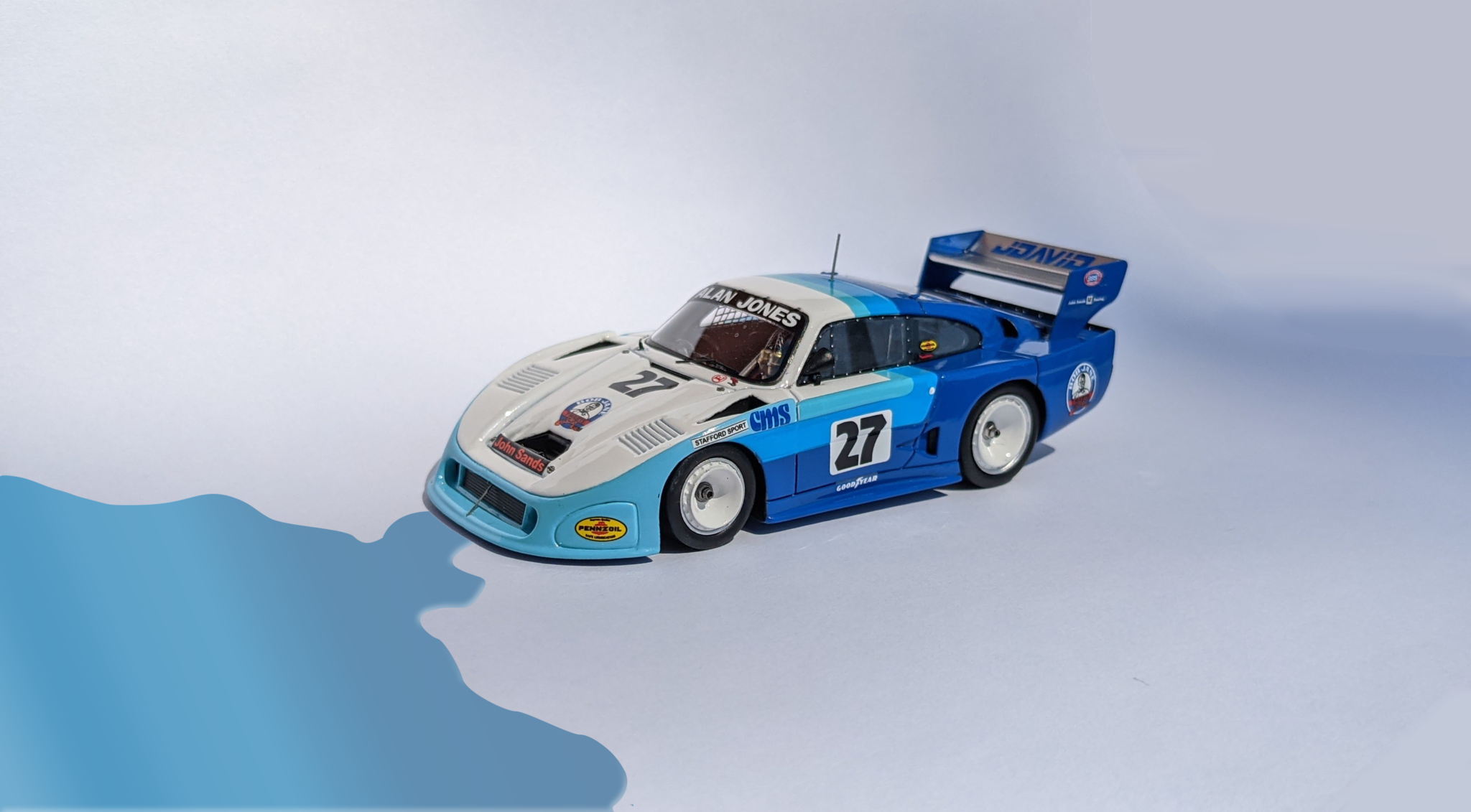
The livery is the same as when it was raced in 1982 by John Fitzpatrick in IMSA, save for the number that was swapped to 27 from its usual 2 or 22, and some additional stickers particular tot the Aussie race, and looks bang-on, based on the video footage of the race.
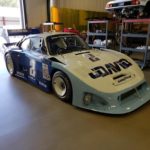
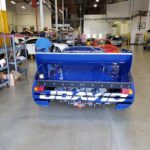
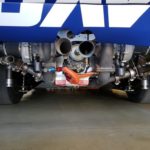
The car has recently been restored by Canepa Motorsports to look like it did in its John Fitzpatrick IMSA days, as you can see from these wonderful shots by my good friend Sean.
 |
 |
 |
It’s been a welcome addition to my collection of Porsche racers in 1:43, filling the 935 K4 hole in the lineup, and at the same time allowing me to delve in to one of my favorite aspects of motorsports, the stories that always live behind the race, the cars, and the drivers.

Added by
Casthead Admin
02-02-2024
Recent Blogs









Comments